Signals
 Data
Data ICP & Lookalike Modeling

A quick AI-generated overview extracted directly from the content of this page.
It should not be a surprise that your SDRs are facing issues with the quality of your CRM data. When you are creating a game plan for sales and marketing, account identification and intelligence insights are two critical factors. While CRM data doubles every 12 to 18 months, 10-25% of the records include critical data errors.
How Much Does Bad Data Hurt Your Sales Teams?
A recent study shows that 91% of companies with more than 11 employees use CRM software for sales and marketing. Given that number, poor data cripples your revenue, sales productivity, forecasting, and ultimately business growth. When poor data flow into your CRM, it creates a barrier to B2B lead generation. Your sales team faces difficulties building a pipeline, your sales forecasts are off, and your sales and financial projections ultimately fail to be met. While poor CRM data can hurt your team in many ways, here are 3 primary concerns.
1. Inefficiency
Dialing a wrong number or emailing an invalid account will waste your team’s valuable time that they could have spent selling. Sales teams can spend as much as a third of their day dealing with poor data. As a result, they get less time to act on the data.
2. Poor Prospect and Customer Relationships
It’s a fact that lost deals and poor customer relationships are side-effects of bad B2B data. Bad data may negatively impact your customer communication. If someone misspells your name, gets your title wrong, or references other incorrect information about you, you are more likely to lose interest and not respond. Undelivered messages, emails, and account or contact mix-ups add up.
3. Low Morale and Frustration Among Your B2B Sales Reps
Putting effort into a wrong prospect can be frustrating for sales reps when relying on inaccurate B2B data to do their job. Most sales reps work on commission or have significant incentives tied to hitting their targets. When they waste time and effort and jeopardize deals due to bad data it inevitably leads to frustration, bringing down the morale of not just the sales team, but the organization as a whole.
Root Causes of Bad CRM Data
On average, 40% of B2B generated leads are either invalid, incomplete, or have duplicate entries. Even the smallest mistake in entering the email Id can create issues for your sales team. Here’s a list of common reasons for poor CRM data:
1. Duplicates
Duplicate data can create a poor customer experience. You might end up sending the same email campaign to duplicate records twice, which indicates a lack of attention to detail. Duplicates can also skew reporting. Multiple reps may contact the same person, or even worse, may work with multiple people at the same account simultaneously.
2. Invalid and Undeliverable Emails
Invalid emails can enter the system when customers intentionally or unintentionally provide wrong contact information or sales reps make errors when entering the data into CRM. Customers might enter typos while filling out forms on your website, at events where customer data is collected, or by using an unreliable data partner.
You can avoid these issues and automatically update your records by accessing SalesIntel’s 4.5+ million human-verified contacts with direct dials. Our data platform identifies incorrect or missing information, compares it with our verified database, and suggests updates. SalesIntel is integrated with some of the most commonly used CRMs namely Salesforce, HubSpot, Outreach, and Salesloft.
3. Role-Based Addresses
Many internal research teams and data providers who operate by scraping websites for publicly available information may resort to generic, role-based email addresses when they cannot find personal contact information. Role-based addresses are generic emails (e.g. marketing@ or info@) used to manage an organization’s generic inquiries. The person handling the address might not be the decision-maker. Even if they are, they are unlikely to engage with an email sent to the role-based email address they’re monitoring. As a result, you are more likely to have emails go unopened, see higher opt-out rates, and receive more spam complaints. All of these can affect your domain reputation and email deliverability.
4. Temporary or Disposable Addresses
Many decision-makers avoid sharing their contact information. One tactic is to create temporary or disposable addresses for downloading useful marketing materials or attending a conference. People may use these email addresses for downloading gated content or they might ask a gatekeeper to provide these addresses to unsolicited sales calls.
With SalesIntel, you get access to verified direct emails you need to reach your B2B decision-makers.
5. Data Decay
Data decays on average more than 30% every year. For example, your decision-maker might get promoted and their title might change, or they may move to another company or retire. Keeping your data up-to-date is a never-ending challenge.
As the most reliable B2B contact data provider, SalesIntel never lets that happen to our clients. To maintain our accuracy and avoid data decay, we re-verify our data every 90 days.
6. Incomplete Decision Support Data
Decision support data helps managers and VPs forecast sales, pipeline management, revenue, etc. Incomplete and inaccurate data skew reports and make them unreliable. Without a reliable way to know the state of the company and what’s actually going on, management cannot make informed decisions. The sales and marketing team uses this data for prospecting and to decide how they will engage and manage prospects and customers. Having incomplete details will make it harder for sales ops and leadership to make decisions about those accounts (like whether or not to consider them in MQLs or SQLs).
Far-Reaching Implications of Bad-Data
For many organizations, it’s shocking to realize the full impact bad data has on your organization. Bad data can affect sales, marketing, support, retention, and virtually every aspect of your business. Here are some examples of the costs associated with bad data:
- The average financial impact of poor data on businesses is $9.7 million per year.
- Bad data is estimated to cost the US more than $3 trillion per year.
- Salespersons waste over 27 percent of their time due to bad data.
A Clearer Path to Sales Success
Poor CRM data creates friction across every stage of the revenue process. The good news is that it is a solvable problem when you combine strong data governance with a trusted GTM intelligence platform.
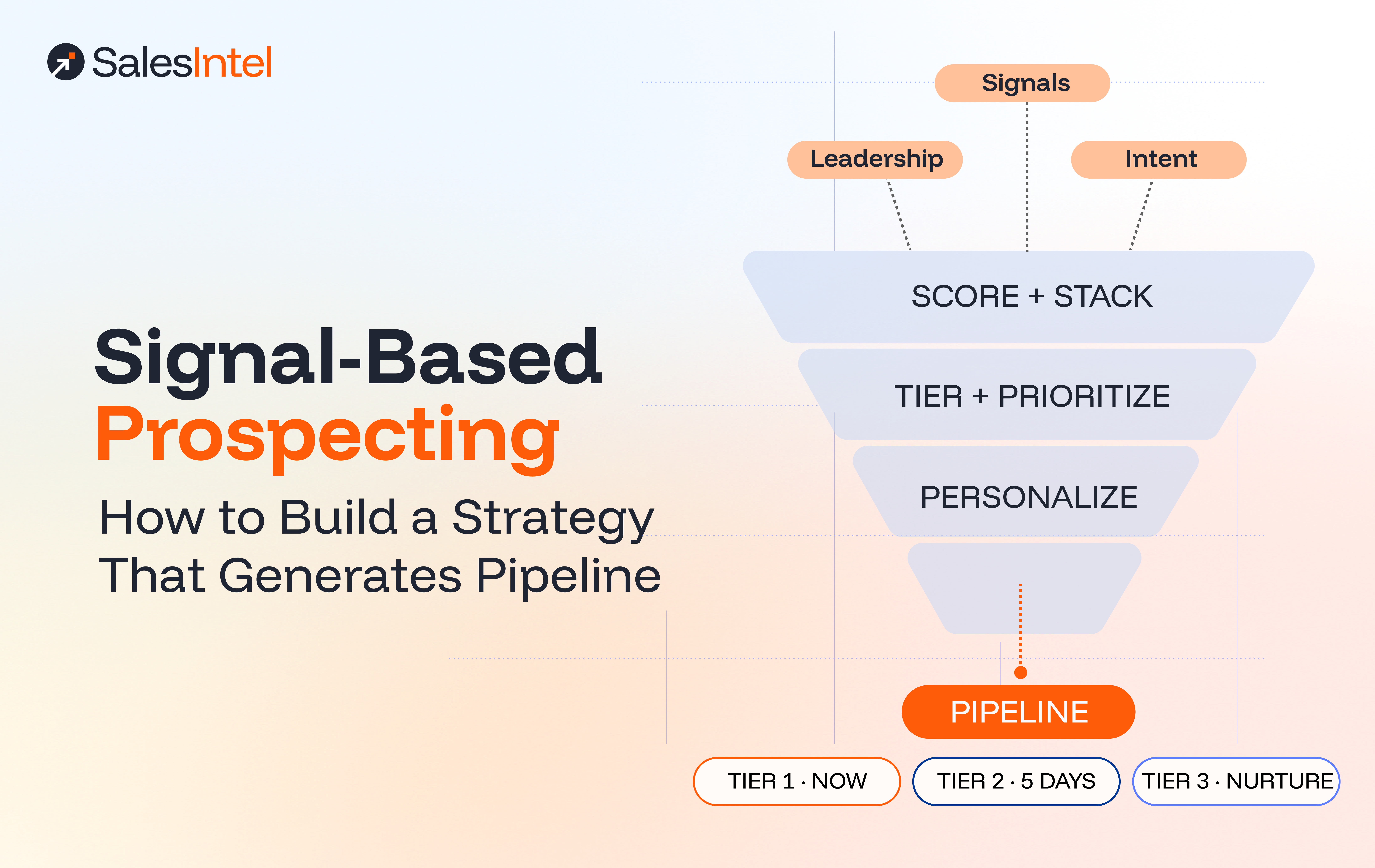
SalesIntel helps revenue teams eliminate the guesswork by providing human-verified B2B data, powerful buying signals, and AI-driven GTM intelligence that keeps your CRM accurate, actionable, and ready for growth. From identifying in-market accounts through intent data to uncovering anonymous website visitors with VisitorIntel, SalesIntel helps your team focus on the prospects most likely to convert. GTMCanvas extends this even further by turning buying signals into automated workflows that qualify accounts, build buying committees, and activate personalized outreach across your GTM stack.
Whether your goal is improving CRM data quality, accelerating pipeline generation, or powering AI-driven go-to-market strategies, SalesIntel gives your team access to the intelligence needed to act with confidence. With human-verified contact data, advanced enrichment, intent signals, RevDriver, VisitorIntel, and unlimited data access, your sales and marketing teams can spend less time fixing data issues and more time engaging the right buyers at the right time.
Ready to see the difference accurate GTM intelligence can make? Start a trial and discover how SalesIntel helps modern revenue teams build cleaner pipelines, engage in-market accounts, and drive predictable growth.
How to Improve CRM Data Quality Before It Costs You
Identifying bad CRM data is only the first step. The real challenge is creating a process that prevents inaccurate, incomplete, and outdated information from entering your systems in the first place. As GTM teams increasingly rely on automation and AI-driven workflows, maintaining data quality has become a business necessity rather than an operational task.
Establish Clear Data Governance Standards
Every organization should define standards for how customer and prospect data is collected, stored, updated, and managed. This includes creating rules for required fields, naming conventions, duplicate management, and ownership. When everyone follows the same process, data remains more consistent and reliable across teams.
Regularly Audit and Clean Your CRM
CRM data naturally decays over time as people change jobs, companies restructure, and contact information becomes outdated. Conducting routine audits helps identify duplicate records, missing information, inactive contacts, and inaccurate account details before they negatively impact sales performance.
Enrich Records with Verified Data
Many CRM records lack the information needed for effective outreach and segmentation. Data enrichment helps fill those gaps by adding verified contact information, firmographics, technographics, and buying signals. The more complete your records are, the more accurately your sales and marketing teams can target the right prospects.
Integrate Data Validation Into Your Workflow
Instead of treating data quality as a periodic cleanup project, build validation directly into your lead capture and enrichment processes. Automated verification can help ensure new records meet quality standards before they enter your CRM, reducing the risk of bad data accumulating over time.
Continuously Monitor Data Health
Data quality is not a one-time initiative. Organizations that achieve the best results establish ongoing monitoring processes to track data completeness, accuracy, duplication rates, and record freshness. Regular monitoring helps teams address issues early before they affect pipeline generation and revenue outcomes.
Leverage Human-Verified Data Providers
Automation can help maintain CRM health, but the quality of external data sources matters just as much. Working with providers that prioritize data verification and accuracy can significantly reduce bounce rates, improve connect rates, and increase confidence in outreach efforts. Solutions like SalesIntel combine human-verified contact data with enrichment and intent signals, helping GTM teams build a stronger data foundation for both sales execution and AI-powered workflows.
Frequently Asked Questions
What is considered bad CRM data?
Bad CRM data is any record that is inaccurate, incomplete, outdated, or duplicated to the point where it degrades your team’s ability to engage the right person. That includes: wrong or outdated email addresses and phone numbers; incorrect job titles or companies (especially after a contact has changed roles); duplicate records for the same person or account; role-based or generic email addresses (marketing@, info@) instead of personal contact details; incomplete records missing key fields like company size, revenue, or direct dial; and records that haven’t been verified or updated in over 90 days. The blog’s stat is a good anchor here: while CRM data doubles every 12 to 18 months, 10-25% of records contain critical data errors at any given time.
How does bad CRM data affect sales team performance?
The blog currently frames this around three concerns: inefficiency, damaged relationships, and low morale. This can be expanded. Bad CRM data affects performance at every stage of the sales cycle. At the top of the funnel, reps waste time prospecting contacts who have moved on. In the middle, incorrect stakeholder information leads to misspelled names, wrong titles, and misdirected outreach that damages trust before a deal even starts. At the forecast stage, inaccurate account data skews pipeline reporting, leading to missed projections. And across the whole team, the morale hit is real: reps working on commission who waste cycles on dead-end outreach lose confidence in the data and start working around the system rather than with it.
How does poor CRM data impact B2B lead generation?
Poor CRM data creates compounding problems throughout the lead generation process. At the campaign level, bounced emails and incorrect contacts inflate your bounce rate, damage domain reputation, and erode deliverability over time. At the scoring level, leads get misrouted or mislabeled as MQLs or SQLs based on incomplete firmographic data, wasting both marketing budget and sales capacity on the wrong accounts. At the inbound level, if form enrichment isn’t in place, leads with minimal data (just an email) enter the CRM without the context needed to qualify or route them quickly. The result is a funnel that looks busy but converts poorly, because the underlying data quality doesn’t support accurate targeting.
What causes CRM data to become inaccurate over time?
CRM data becomes inaccurate through a combination of natural decay and human error. On the decay side: people change jobs (the average B2B professional changes roles every two to three years), companies rebrand, merge, or go out of business, and contact details like phone numbers change. On the human error side: reps manually entering data make typos, prospects provide inaccurate information on forms (intentionally or not), and data imports from event lists or third-party vendors introduce errors at scale. The result is that even a database that was clean at the start of the year can have significant accuracy problems by Q3, which is why ongoing re-verification matters more than periodic cleanups.
What is CRM data decay?
CRM data decay is the gradual degradation of contact and account data accuracy over time. It happens naturally as the business world changes around your database. Contacts get promoted, leave companies, retire, or change roles. Companies get acquired, rebrand, or close. The stat in the blog is the right anchor: data decays at more than 30% per year on average. That means if you’re not actively maintaining your CRM, roughly a third of your database becomes unreliable within 12 months. Data decay is different from data entry error in that it doesn’t require a mistake to occur. Even a perfectly entered, fully verified record will decay if it isn’t re-verified regularly.
How can businesses improve CRM data quality?
Improving CRM data quality requires both a process and a platform. On the process side: establish a data governance policy that defines what a “complete” record looks like; set a regular cleansing cadence (quarterly minimum); create validation rules at the point of entry to prevent bad data from entering in the first place; and assign ownership of data hygiene within the RevOps function. On the platform side: integrate a data provider that re-verifies records automatically and surfaces when contact information has changed. SalesIntel’s CRM integration (available for Salesforce, HubSpot, Outreach, and Salesloft) identifies incorrect or missing information across existing records, compares them against verified data, and suggests updates in place, without requiring a manual export-import cycle.
How often should CRM data be cleaned?
At minimum, quarterly. Given that B2B data decays at over 30% annually, waiting for a once-a-year cleanup means you’re working with materially degraded data for the majority of the year. A quarterly cadence catches major shifts: contacts who have changed roles, accounts that have merged or been acquired, duplicate records that have accumulated from new campaigns or imports. For high-velocity sales teams or those running significant outbound, a monthly review of the most active segments is worth building into the RevOps workflow. The most efficient approach combines periodic cleanses with continuous enrichment so that new and existing records are both validated as they enter and maintained as conditions change.